Double-Sided Optical Improvement
Applied to both the front and the back face of the glass, the AR coating reduces the reflection losses occurring on both surfaces and increases optical efficiency.
AR
Technology Overview
Anti-reflective coatings that combine high optical transmittance, low reflection, and multilayer optical design are developed with TEKNOMA’s thin film engineering and precision coating production experience. Double-sided AR coating technology is applied to both the front and the back face of the glass in order to reduce the reflection losses that occur on optical glass surfaces and to increase light transmittance.
Produced with magnetron sputtering and ion beam sputtering, both high vacuum based thin film coating technologies, these coatings can be applied with high uniformity onto Schott Borofloat 33 (BS) glass, soda-lime glass (SLG), quartz, BK7 optical glass, and similar surfaces.
Thanks to the multilayer coating architecture, surface reflections are reduced and high optical performance is achieved across the target wavelength range.
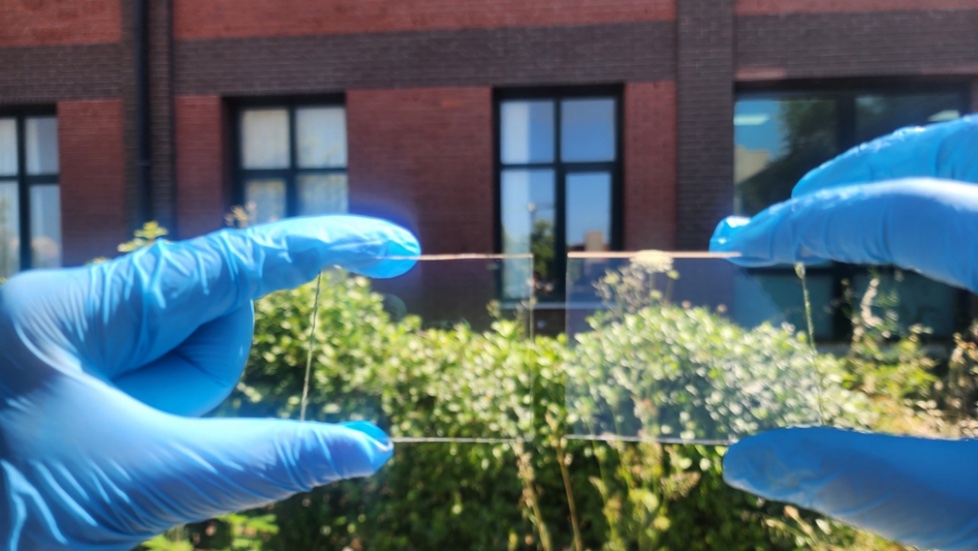
Applied to both the front and the back face of the glass, the AR coating reduces the reflection losses occurring on both surfaces and increases optical efficiency.
The multilayer thin film structure increases light transmittance across the target wavelength range while bringing surface reflections down to a minimum.
The layer structure and coating thicknesses can be optimized specifically for the substrate type, target wavelength, and application requirements.
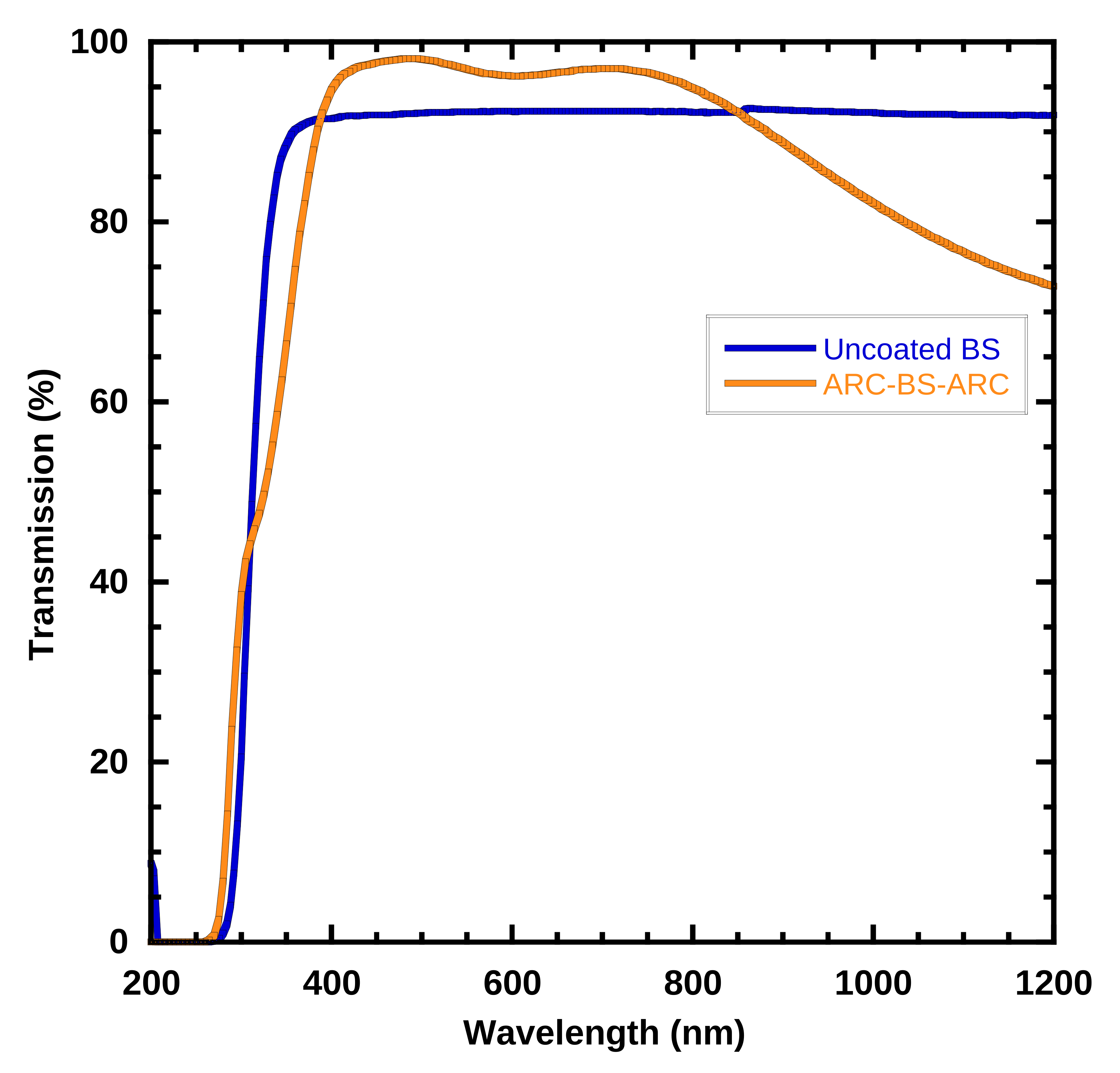
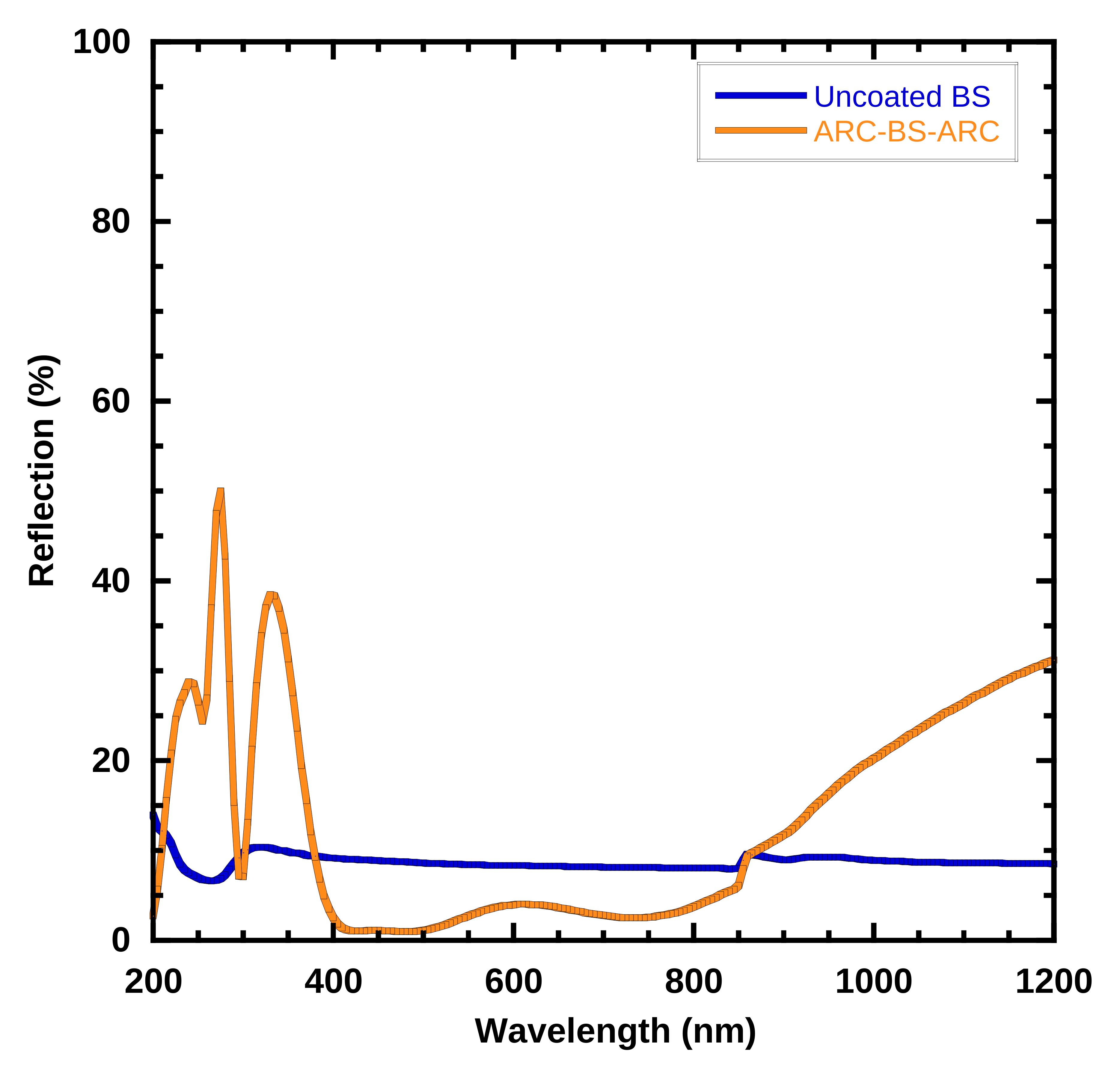
The effect of the double-sided AR coating on optical performance was evaluated by comparing the transmittance and reflection values of uncoated and AR coated BS glass samples.
The average transmittance measured as 92.12% on uncoated BS glass was found to rise to 96.98% after the double-sided AR coating was applied. The reflection value was reduced from 8.53% to 2.46%.
The results obtained show that the double-sided AR coating significantly reduces surface reflections and increases light transmittance.
| Sample | Glass thickness | Average transmittance (%) (400–700 nm) | Average reflection (%) (400–700 nm) | Transmittance at 550 nm (%T) | Reflection at 550 nm (%R) |
|---|---|---|---|---|---|
| Uncoated Glass | 3.3 mm | 92.12 | 8.53 | 92.25 | 8.42 |
| AR Coated Glass | 3.3 mm | 96.98 | 2.46 | 96.97 | 2.72 |
Uncoated glass
Double-sided AR coated glass
Schematic showing how the double-sided AR coating increases light transmittance by reducing surface reflections. Uncoated glass (left), double-sided AR coated glass (right).
Optical window, imaging, and lighting applications that require reduced reflection losses and high light transmittance.
Reducing reflection and preserving image quality on protective glasses used in front of cameras, image sensors, and optical detectors.
Reducing reflections on the PV module front glass so that a higher proportion of solar radiation reaches the photovoltaic cells.
Improving image quality and measurement accuracy by reducing reflection losses on protective glasses and optical windows used in industrial cameras, optical metrology, and production monitoring systems.
We design and produce multilayer AR coatings matched to the target wavelength for a range of substrates such as optical glass, borosilicate glass, photovoltaic module glass, camera protective glass, and sensor windows.
Get in touch for detailed information about AR coating solutions and production tailored to your application.