DMD Thin Films

DMD

Transparent DMD (Dielectric/Metal/Dielectric) Thin Films

DMD multilayer thin films combine high optical transmittance, superior electrical conductivity, and advanced electromagnetic shielding performance in a single structure, developed with TEKNOMA’s advanced engineering and precision manufacturing infrastructure.

Produced using magnetron sputtering technology, these new generation coatings can be applied with high homogeneity onto soda-lime (float) glasses, large area glass surfaces, PC, PMMA, PET, and various flexible polymer substrates.
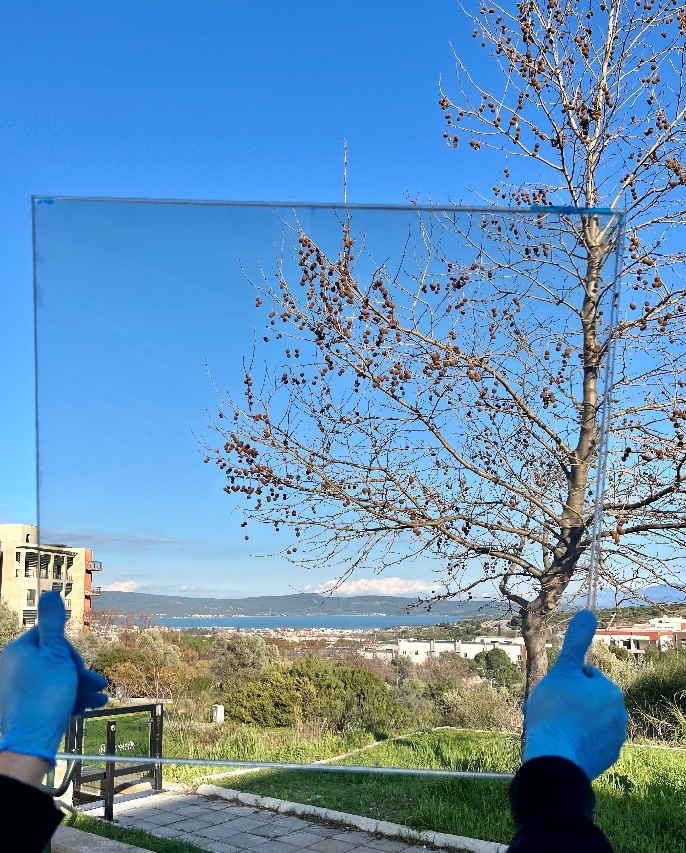
Large area transparent DMD thin film coating
DMD coatings combine transparency and conductivity on the same surface.

Why TEKNOMA Dielectric/Metal/Dielectric Thin Films?

Versatile Performance

They offer low surface resistance, high electrical conductivity, and effective electromagnetic shielding without compromising optical transparency.

Advanced Optoelectronics

Thanks to ultra-thin metal interlayers, EMI shielding, transparent radar absorbing material technologies, infrared reflection, and transparent conductive surface applications are united on a single platform.

Industrial Solutions

They offer an innovative infrastructure for the defense industry, aerospace, smart glass technologies, and advanced electronic systems.

Applicable Substrates

To meet diverse application requirements, three fundamental DMD multilayer thin film structures are produced: ITO/Ag/ITO, ZTO/Ag/ZTO, and AZO/Ag/AZO.

  • 2 mm, 3 mm, and 4 mm soda-lime (float) glass
  • 50 cm × 50 cm large area glass surfaces
  • PC (Polycarbonate)
  • PMMA (Polymethyl Methacrylate / Acrylic / Plexiglass)
  • PET (Polyethylene Terephthalate)
  • Flexible polymer substrates

DMD Structures

ITO/Ag/ITO

Maximum performance at industrial standards

ITO/Ag/ITO multilayer thin-film structures are produced for applications requiring the highest optical and electrical performance at industrial standards.

  • They provide maximum transparency and low surface resistance in the visible region.
  • They stand out with superior thermal and chemical stability.
  • They ensure high reliability for high-performance electromagnetic shielding, precision touch panels, and transparent heater glasses for the aerospace industry.
ZTO/Ag/ZTO

Innovative solution for curved surfaces and flexible optoelectronics

The ZTO/Ag/ZTO structure has been developed against the micro-cracking problems that traditional coatings face on bendable or curved surfaces.

  • The amorphous ZTO in the outer layers provides a durable protective shield against harsh mechanical conditions.
  • In addition to flat glasses, it maintains its form without cracking on curved surfaces and flexible substrates.
  • With high electrical conductivity and advanced IR reflection, it is suitable for RAM/absorber systems, flexible solar cells, and wearable technologies.
AZO/Ag/AZO

Sustainable, environmentally friendly, and cost-effective coating

The AZO/Ag/AZO structure is produced for large-area coating requirements and cost-oriented sustainable projects.

  • It eliminates structural reliance on rare elements such as indium, providing a cost advantage in large-scale manufacturing.
  • Thanks to Low-E properties, it preserves indoor heat in winter and minimizes the thermal effect of the sun in summer.
  • It is suitable for architectural glass applications that provide energy efficiency in smart buildings and for photovoltaic panel mass production.

High Stability Against Time

The 7-month aging tests of ITO/Ag/ITO multilayer thin films produced by TEKNOMA show that optical stability is preserved.

Table 1. Optical transmittance values at 550 nm for uncoated and ITO/Ag/ITO coated PC samples.

SampleThickness (nm)Initial optical transmittance (%T)Optical transmittance after 7 months (%T)
Uncoated-PC-75.875.8
ITO/Ag/ITO/PC100.867.567.1

Only a 0.4% change after 7 months shows that the outer ITO layers isolate the centrally located ultra-thin Ag interlayer from atmospheric effects, oxidation, and moisture.

Layer Optimization and Electrical/Optical Data Analysis

The success of a DMD structure depends on precisely optimizing the thickness balance of the dielectric and metal layers.

Table 2. Surface resistance and optical properties of ZTO, ZTO/Ag, and ZTO/Ag/ZTO coatings on SLG and PET substrates.

SampleSurface resistance SLG (ohm/sq)Surface resistance PET (ohm/sq)550 nm %T SLG550 nm %T PET
Uncoated--91.659.2
ZTOHR*HR*83.154.9
ZTO/Ag57.014.074.950.9
ZTO/Ag/ZTO12.620.888.962.0

HR*: High Resistance. The ZTO/Ag/ZTO structure reaches 12.6 ohm/sq surface resistance on glass while increasing transmittance to 88.9%.
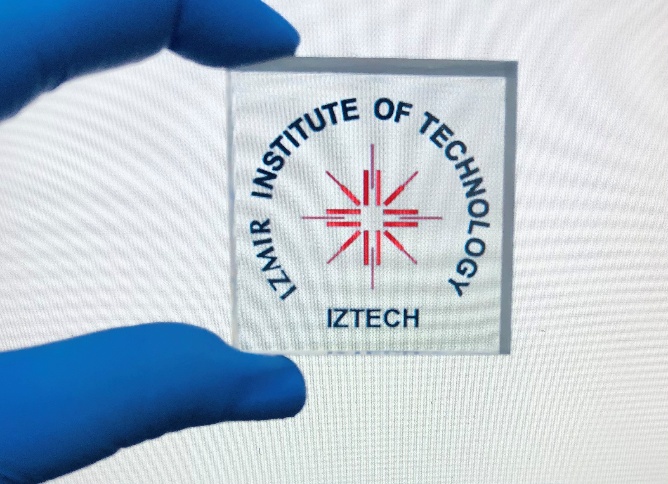
Visual demonstration of the ZTO/Ag/ZTO multilayer thin film coating.

Structural and Performance Comparison with Traditional ITO

The AZO/Ag/AZO multilayer structure is a strong alternative to thick single-layer ITO coatings widely used in industry, both in performance and material savings.
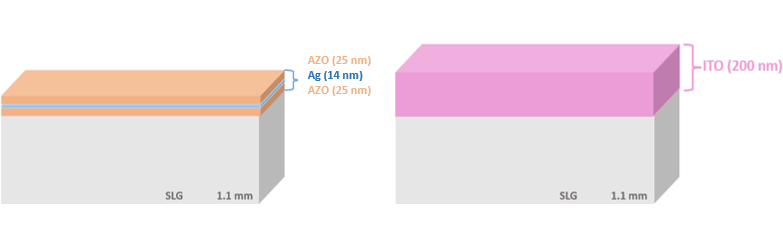
Comparison of traditional single-layer ITO (200 nm) and ultra-thin AZO/Ag/AZO (64 nm total thickness) architecture.

Table 3. Thickness, surface resistance, and optical transmittance values of standard glass, ITO, and AZO/Ag/AZO.

MaterialThickness (nm)Surface resistance (ohm/sq)550 nm %T
Uncoated Standard Glass (SLG)--91.6
Single Layer Conventional Glass (SLG/ITO)20017.584.6
TEKNOMA Multilayer Glass (SLG/AZO/Ag/AZO)25/14/256.091.2

Performance Analysis and Optoelectronic Data

The electrical and optical performance of ZTO/Ag/ZTO coatings on glass and flexible polymer substrates is supported by literature references.

Table 4. Optical transmittance and surface resistance data of ZTO/Ag/ZTO multilayer films on different substrates.

SampleSurface resistance (ohm/sq)550 nm %T
SLG (Standard Glass)-91.6
ZTO/Ag/ZTO/SLG8.6 ± 0.291.2
PC (Polycarbonate)-75.7
ZTO/Ag/ZTO/PC6.7 ± 0.277.2
PET (Polyethylene Terephthalate)-59.2
ZTO/Ag/ZTO/PET11.2 ± 0.262.0

Table 5. Physical and optical parameters of reference TCO coatings.

TCOAverage surface resistance (Ω/sq)Average thickness (nm)%T @ 545 nmΔ%T (350-750 nm)
ITO12.65 ± 0.26190.88 ± 0.9886.6782.62
ZAZ9.94 ± 1.0655.69 ± 3.9690.3287.46
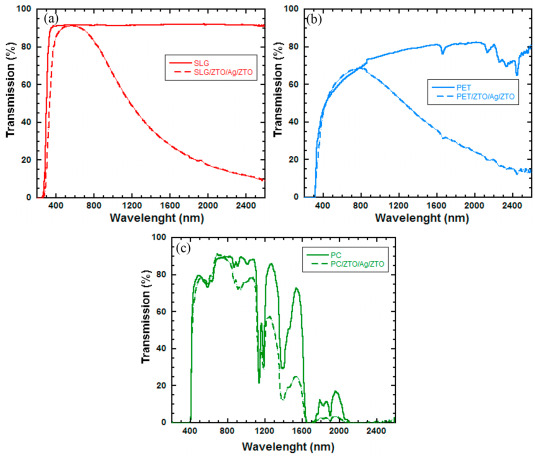
Optical transmittance spectra of ZTO/Ag/ZTO multilayer thin films applied on SLG, PET, and PC substrates.
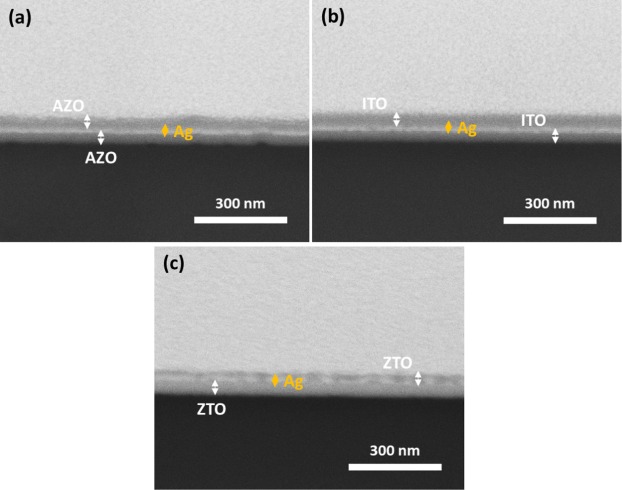
Cross-sectional SEM images of AZO/Ag/AZO, ITO/Ag/ITO, and ZTO/Ag/ZTO thin films.

Production Processes and Supply Solutions

  • TEKNOMA offers not only a high-performance product but also a flexible solution partnership that adapts to your production processes.
  • High-quality coating can be applied with magnetron sputtering precision on substrates with the thickness you need.
  • The 2 mm, 3 mm, and 4 mm float glass options in the standard production line accelerate manufacturing processes; the glass thickness used does not affect the unit coating cost.
  • For high-volume mass production requests, application-specific optical modeling needs, and technical support, the R&D team can be contacted directly.

References

  1. Ekmekcioglu, M., Erdogan, N., Astarlioglu, A. T., Yigen, S., Aygun, G., Ozyuzer, L., & Ozdemir, M. (2021). High transparent, low surface resistance ZTO/Ag/ZTO multilayer thin film electrodes on glass and polymer substrates. Vacuum, 187, 110100. DOI
  2. Bozkurt, H., Ekmekcioglu, M., Ozdemir, M., Aygun, G., Ozyuzer, L., & Varlikli, C. (2021). Electroluminesence Properties and Stability of Super Yellow on ZAZ and ITO Anodes. 2021 5th International Symposium on Multidisciplinary Studies and Innovative Technologies (ISMSIT), 356-359. DOI
  3. Ozbay, S., Erdogan, N., Erden, F., Ekmekcioglu, M., Rakop, B., Ozdemir, M., Aygun, G., & Ozyuzer, L. (2021). Surface free energy and wettability properties of transparent conducting oxide-based films with Ag interlayer. Applied Surface Science, 567, 150901. DOI